



Between work deadlines, client meetings, family responsibilities, and the general chaos of a modern career, “learning Arabic” often feels like an intimidating dream saved for “someday.” Indeed, most adult professionals believe that mastering a rich language like Arabic demands several hours of daily study, exhaustive grammar drills, or taking time off from work. However, modern cognitive science and practical language acquisition models prove the opposite: a focused 15-minute daily commitment, executed consistently, creates far stronger long-term fluency than sporadic, exhausting weekend study marathons.
Table of Contents
- 1. The Science of Micro-Learning: Why 15 Minutes Daily Beats Weekend Marathons
- 2. Anatomy of a 15-Minute Arabic Learning Session
- 3. Habit Stacking: How to Anchor Arabic into Your Working Day
- 4. Focusing on High-Yield Arabic: Root Systems & Core Vocabulary
- 5. Realistic Progression Timeline for 15-Minute Learners
- Frequently Asked Questions (FAQs)
Quick Answer:
Yes, busy professionals can realistically learn Arabic in 15 minutes a day by leveraging short, micro-learning sessions focused on consistency over duration. Consequently, by committing to 15 focused minutes daily, you build active recall, prevent memory decay, and integrate Arabic into your existing routine without disrupting your demanding work schedule.
1. The Science of Micro-Learning: Why 15 Minutes Daily Beats Weekend Marathons
The human brain retains new language patterns through frequent exposure rather than massed practice. For instance, when you attempt to study Arabic for three hours on a Sunday, your cognitive load spikes after the first 45 minutes, leading to rapid diminishing returns. In contrast, 15 minutes of high-intensity study every day leverages two critical psychological phenomena: The Spacing Effect and Memory Consolidation.

According to cognitive retention research, revisiting new vocabulary every 24 hours transfers data from short-term working memory to long-term neural pathways far more reliably than weekly study blocks. Furthermore, a daily 15-minute session keeps your brain constantly wired to process Arabic roots, sentence structures, and pronunciation rules efficiently.
2. Anatomy of a 15-Minute Arabic Learning Session
To maximize a 15-minute window, every single minute must be structured intentionally. Specifically, you cannot spend ten minutes searching for learning materials or deciding what to study. Here is the optimal micro-session breakdown:
- Minutes 0–3 (Active Recall Warm-Up): First, review 5 to 7 flashcards or vocabulary items learned yesterday. Test yourself before looking at the answers.
- Minutes 3–10 (Core Acquisition): Next, learn 2 to 3 new words, one sentence pattern, or a short Quranic verse structure. Focus on pronunciation, root patterns, and grammatical context.
- Minutes 10–15 (Practical Application): Finally, speak the new phrases out loud, write down an original sentence, or listen to a 60-second audio clip from a native speaker.

3. Habit Stacking: How to Anchor Arabic into Your Working Day
The biggest hurdle for working adults is not finding time, but remembering to practice consistently. Therefore, the most effective strategy to overcome this is Habit Stacking—linking your new 15-minute Arabic study habit to an established daily routine.
3 Practical Habit-Stacking Formulas:
- Morning Coffee Routine: “After my morning coffee brews, I will spend 15 minutes reviewing Arabic vocabulary before checking work emails.”
- Commute Window: “During my daily train ride or drive, I will listen to 15 minutes of structured audio lessons focusing on conversational or Quranic phrases.”
- Evening Wind-Down: “Right after shutting down my work laptop for the day, I will complete one 15-minute online practice module to clear my mind.”
4. Focusing on High-Yield Arabic: Root Systems & Core Vocabulary
Arabic is built on an extraordinarily structured 3-letter root system (الجذر). As a result, once you understand how roots work, learning one word unlocks dozens of related terms. For busy professionals, focusing on root patterns yields maximum results in minimal time.
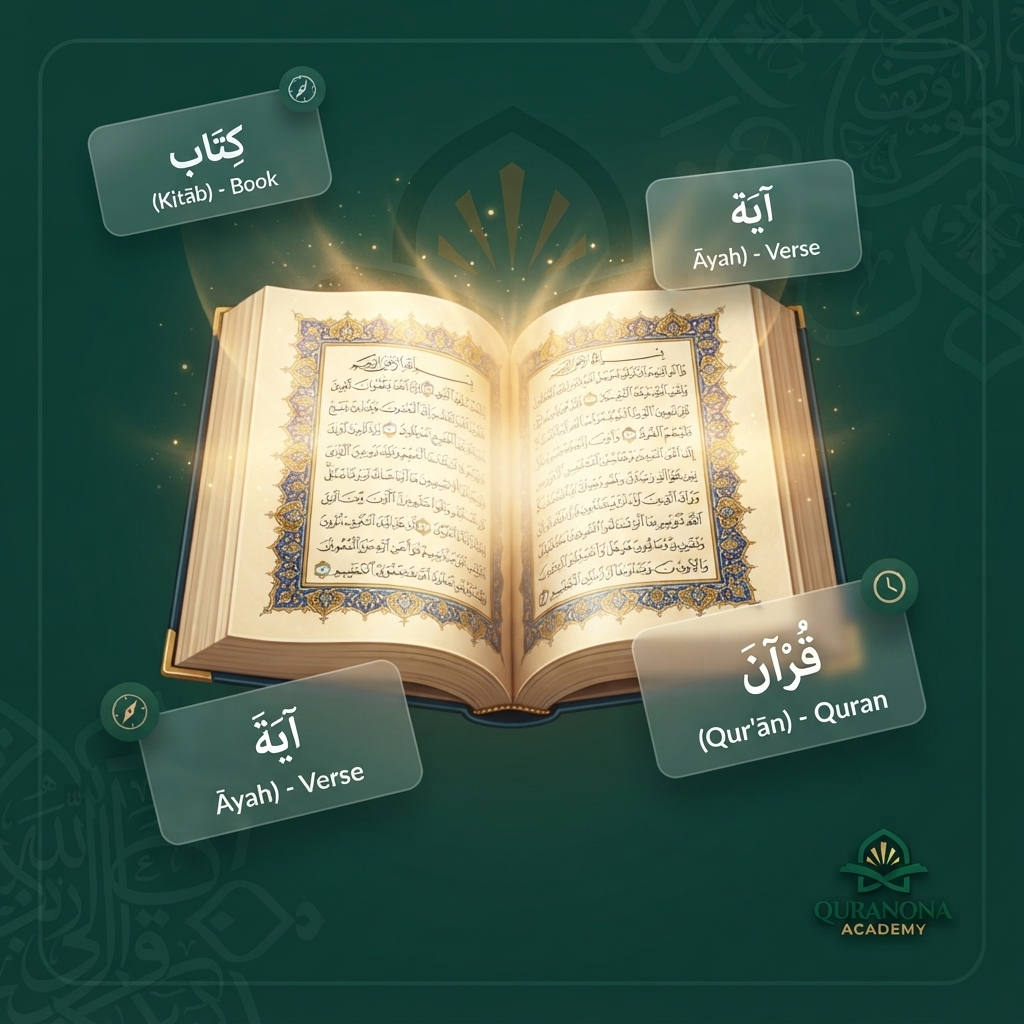
For example, consider the root ك-ت-ب (K-T-B), which fundamentally relates to writing:
- كَتَبَ (Kataba): He wrote
- كِتَاب (Kitab): Book
- مَكْتَب (Maktab): Office or Desk
- مَكْتَبَة (Maktabah): Library or Bookstore
- كَاتِب (Katib): Writer or Author
By spending your 15 minutes studying foundational roots rather than isolated words, your vocabulary multiplies exponentially with minimal effort.
5. Realistic Progression Timeline for 15-Minute Learners
What can you actually achieve with just 15 minutes a day? Below is a realistic timeline based on structured online instruction:
Month 1: Mastery of the Arabic alphabet, correct pronunciation of difficult sounds (like ع and ح), and basic greetings.
Month 3: Ability to build simple sentences, introduce yourself professionally, and recognize common Quranic words and short surahs.
Month 6: Comfortable reading short Arabic texts with voweling (Tashkeel), conducting basic transactional conversations, and understanding daily expressions.
Year 1: Solid foundation in conversational and Quranic Arabic, enabling you to read authentic literature slowly and comprehend regular prayers and lectures.

Frequently Asked Questions (FAQs)
Is 15 minutes a day really enough to become fluent in Arabic?
In fact, 15 minutes a day is sufficient to build strong conversational comprehension, functional literacy, and foundational knowledge without overwhelming your daily schedule. Although native-level fluency requires deeper immersion over time, 15 minutes daily creates the critical habit required for long-term language retention.
Should I focus on Modern Standard Arabic (MSA) or Dialects?
If your goal includes reading, understanding Quranic texts, professional communication, or official media, starting with Modern Standard Arabic (MSA) or Classical Arabic is strongly recommended since it serves as the universal foundation across all regions.
How do I keep myself accountable to practice every single day?
To stay consistent, use a habit-tracking app, anchor your practice to an existing daily event like morning coffee, or work with a dedicated online tutor through structured short programs.
Start Your 15-Minute Daily Arabic Journey Today
At Quranona Academy, we offer tailored online Arabic and Quranic courses designed specifically to fit into the demanding schedules of working professionals worldwide.
Explore Our Online Courses